Impact
The Operators Everyone Overlooked Are About to Win
Ron Kutas of OneWall demonstrates that workforce housing’s overlooked complexity was never a liability, it was training. As capital demands operational clarity, operators who built discipline under pressure are positioned to lead.

Chelsie Maki
Director of Communications

Sharp Operations Became a Survival Requirement
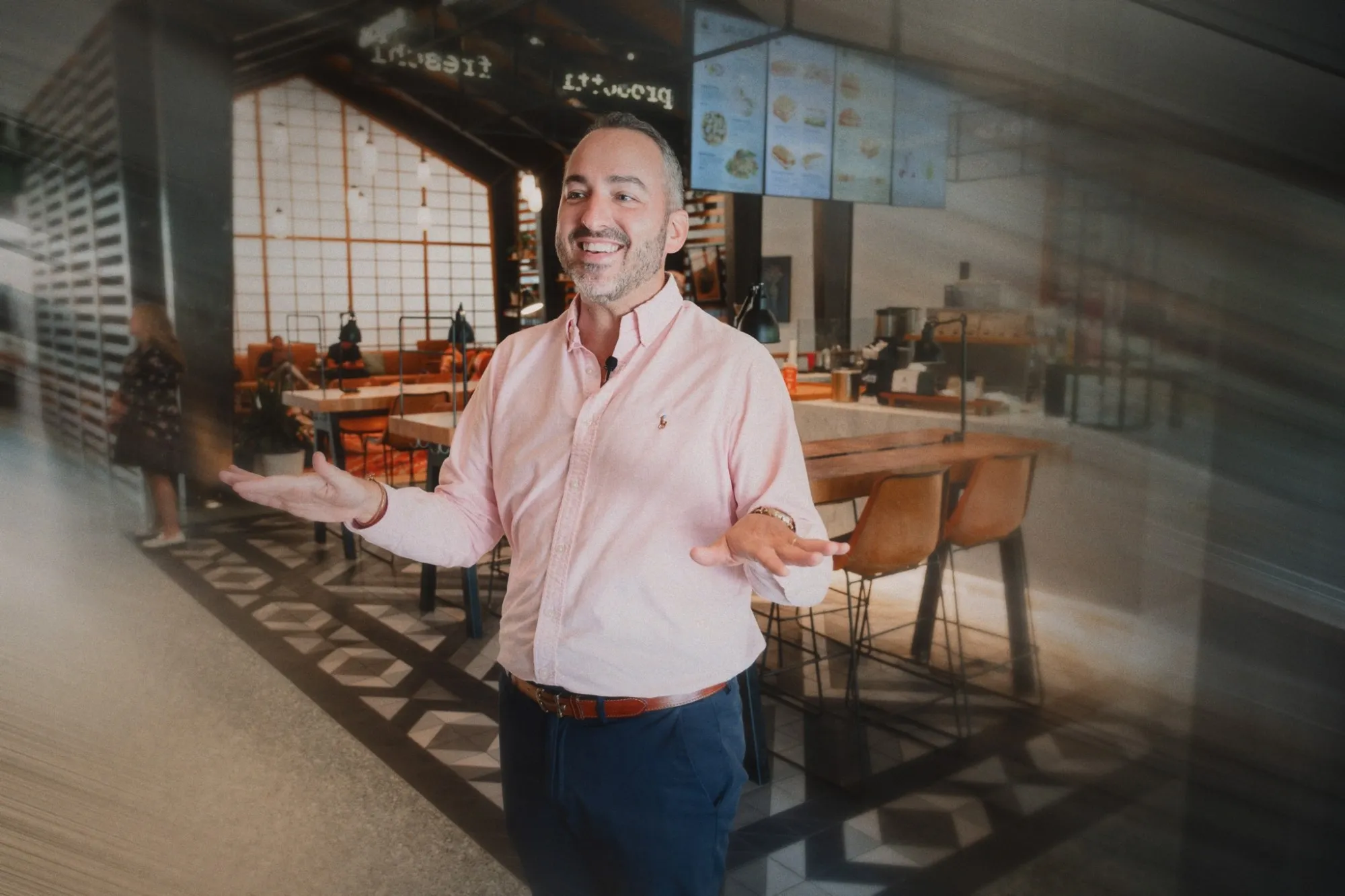
Meet Ron Kutas. Kutas didn’t get the memo that workforce housing was supposed to be unglamorous. As CEO of OneWall, he manages more than 6,000 units across eight states. Over the last six months, OneWall has been able to double its fee-managed business while helping owners increase their net operating income (NOI), slash maintenance response time by two-thirds, and increase retention threefold. No new hires. No magic. Just smarter, streamlined operations. He sat down with Or Bokobza, CEO of proptech firm Venn, for a conversation that was equal parts strategy session and industry therapy.
Bokobza: Let’s start with the thing nobody wants to say out loud. Workforce housing has been treated like a second-tier asset class for a long time. Is that fair?
Kutas: It’s fair in the sense that it’s been true, but I’d push back on the framing a little. It’s not that workforce housing was overlooked because it wasn’t worthy of attention. It was overlooked because it’s hard. The margins are thin, the operations are complex, the residents have real needs. There’s no room to hide. I think a lot of capital, a lot of platforms, a lot of the industry conversation just … took the path of least resistance and went where it was easier.

Bokobza: So the proptech world went chasing luxury lease-ups and left this whole segment to figure it out alone?
Kutas: Basically. What happened is the operators who stayed in this space got pretty good. Because they had to. You can’t survive in workforce housing on instinct alone. You develop a kind of operational discipline that I genuinely don’t think exists at the same level anywhere else in multifamily.
The operators who stayed in this space got pretty good. Because they had to. You can’t survive in workforce housing on instinct alone. You develop a kind of operational discipline that I genuinely don’t think exists at the same level anywhere else in multifamily.
Ron Kutas
CEO, OneWall
Bokobza: Yet those same operators are often running on infrastructure that hasn’t kept up with how good they actually are.
Kutas: That’s exactly the tension. The instincts are sharp, but the systems haven’t matched them. COVID made that impossible to ignore. It exposed operators who didn’t have disciplined workflows around leasing, screening, and collections. Now you layer in insurance costs, interest rates, maintenance, and turn costs all going the wrong direction at once. There’s no room left for inefficiency. Sharp operations stopped being a competitive advantage and became a survival requirement.
Bokobza: Yet institutional capital still gravitates toward Class A. Why?
Kutas: Predictability. Predictable maintenance, predictable CapEx, predictable unit turnover. Workforce housing has historically been the opposite of that. But that’s exactly what the right operating infrastructure changes. Data-driven decision making brings predictability to operations, to budgets, to how capital gets allocated. That’s the real opportunity here.
Bokobza: What does that actually look like on the ground though?
Kutas: It looks like a leasing coordinator manually chasing renewals when that should be automated. It looks like a maintenance coordinator triaging work orders from an email inbox. It looks like a community manager spending half their week pulling together reports that a modern system would handle in minutes. None of those things feel catastrophic in isolation. But together? You’re leaving real money on the table. Every month.
Bokobza: What took so long? Why are we still having this conversation?
Kutas: When you’re drowning in spreadsheets and manual tasks, you genuinely believe you can’t stop to fix it because you’ll fall behind.
Bokobza: But it wasn’t really working.
Kutas: It wasn’t really working. It just wasn’t visibly failing. That’s almost more dangerous.
Bokobza: Yet operators in this segment still hesitate on technology. Why?
Kutas: Because they don’t see it as an investment. They see it as a line item they can’t afford. Honestly, the industry has earned some of that skepticism. Operators who finally got brave enough to try something new got burned. The onboarding was a nightmare, the integration broke things, the process looked nothing like what was sold to them. It caused real disruption. And once that happens, the next pilot becomes that much harder to greenlight. There’s a trust deficit in this space that the proptech world created and hasn’t fully reckoned with.
Bokobza: The math still doesn’t support staying on the sidelines.
Kutas: The math absolutely does not support that instinct. The costs have come down. You can do more with fewer vendors than ever before. The dollar you’re not spending on the right technology isn’t savings, it’s closer to $20 lost to inefficiency. That catches up with you. It just catches up with you quietly, which is why nobody notices until it’s a real problem.
We Wanted Every Resident to Feel Like They Belong Somewhere
Bokobza: I’ll add something here because I know this comes up. There’s a perception that Venn is a luxury product, built for Class A lease-ups and not for operators like you.
Kutas: You do have that reputation.
Bokobza: We hear it all the time, and I want to address it head on. We didn’t build it that way. That was never the intention. We wanted to build a platform that supports customer relationships at scale. While it’s been widely adopted by luxury operators invested in brand and experience, we originally built Venn for ourselves. We were owner-operators who invested in what once was a very challenging neighborhood. Our portfolio wasn’t too dissimilar to yours. We wanted every resident, regardless of what they’re paying in rent, to feel like they belong somewhere. That’s the vision. The platform followed from that, not the other way around.
We wanted to build a platform that supports customer relationships at scale. While it’s been widely adopted by luxury operators invested in brand and experience, we originally built Venn for ourselves.
Or Bokobza
CEO and co-founder, Venn
Kutas: That actually matters to operators in this segment. Their resident problems are often more urgent and more disruptive to daily life. Someone living paycheck to paycheck can’t afford to just move when something isn’t working. They’re not leaving because the concierge doesn’t remember their dog’s name. They need the maintenance team to show up. They need the community manager to actually solve problems. Operational efficiency isn’t a nice-to-have for these residents, it is the product.
Bokobza: What changed for you personally? Because you came to this earlier than most.
Kutas: I think I’ve always been wired that way. I get excited about what’s possible rather than comfortable with what’s familiar. And when I started seeing what modern infrastructure could do, real-time unit economics, predictive maintenance, resident engagement tools that move the needle on retention, I couldn’t unsee it. The question stopped being “do I need this” and became “how fast can I get there?”
Bokobza: That’s actually how we found each other. I want to talk about that because I think the story of how operators and platforms come together matters.
Kutas: It does. I’ve seen a lot of technology come through this industry promising to change everything. Most of it overpromises and underdelivers. What was different with Venn was that you and the team weren’t selling me a product, you were sharing a vision. I looked at it and thought, “Yeah, I see exactly where this goes. I want to be part of building that.”
Bokobza: I remember that conversation. You asked harder questions than some of our institutional clients.
Kutas: Because I had to. I don’t have the cushion to absorb a bad technology decision. Every dollar I spend has to work. But that’s also why I knew pretty quickly that this was real. The answers held up.

We’re Building a Better Table
Bokobza: Let’s talk about where the industry is headed. I think operators who don’t get sharper about their operations in the next 18 to 24 months are going to find themselves in a very uncomfortable position, not just operationally but competitively as well.
Kutas: The workforce housing segment is attracting serious capital right now, and those investors are asking harder operational questions than they were five years ago. Clean data. Documented processes. Evidence that you are running your portfolio like a business. If you can’t answer those questions, you’re not just leaving operational value on the table, you’re losing access to capital and future business. And that’s a different conversation entirely.
Bokobza: That’s the part that I don’t think has fully landed yet for a lot of operators. It’s not just about efficiency. It’s about what story your data tells when someone is deciding whether to back you.
Kutas: Exactly. Here’s what I want owners and operators in this segment to hear: the tools that used to be out of reach are accessible now. The operational visibility that institutional players have been building for years is available to you today. In a lot of ways you’re better positioned to deploy it because you’re closer to the asset, closer to the resident, and closer to the decisions that actually move the needle.
Bokobza: If an operator is resource-strapped, they’ve got a lean team, a minimal budget, and don’t know where to start, what’s your advice?
Kutas: Start with visibility. Before you overhaul anything and before you scrutinize your vendor list (and you should scrutinize your vendor list), get clear on what’s actually happening in your portfolio. Where are the leaks? Where is time being wasted? What does your data actually say versus what you think it says? Most operators are making decisions based on gut and habit. The first step is just seeing clearly. Everything else follows from that. And if you want to know what to do next? Come talk to Or because the path from “I can see the problem” to “I’m solving it systematically,” that’s where the real conversation starts.
Bokobza: That conversation is one we’re always ready to have. Last question, and I’m going to make it a little uncomfortable. Is workforce housing sexy enough to attract the talent, the capital, and the attention it deserves? Or are we always going to be fighting for a seat at the table?
Kutas: I think the honest answer is that the sexiness follows the performance, when this segment starts producing the kind of clean, data-driven operational results that institutional capital responds to when the narrative changes. We’re not asking for a seat at the table. We’re building a better table.

Chelsie Maki Director of Communications
Chelsie Maki is Director of Communications at Venn, leading press and company communications. Chelsie writes about Venn's customers, product launches, and company news.
Connect with Chelsie on LinkedIn