


Impact
The 2027 Property Management Platform: Stop Buying Apps, Start Owning Your Infrastructure
Struggling with app fatigue? Discover why the 2027 property management tech stack is shifting from buying disjointed apps to owning a unified infrastructure platform.
The property management tech stack is broken. For years we’ve said, “there’s an app for that.” Fast forward to today, and your onsite team has separate logins for lead nurture, maintenance, rent collection, lease signing, and resident communication. This compounds to your residents, who have to download four different apps just to live in your building.
As we approach 2027, the most profitable multifamily operators are shifting their strategy. They are done buying disjointed point solutions. Instead, they are investing in unified infrastructure. Here is why the future belongs to operators who control their technology ecosystem, and how you can make the shift.
The Evolution of the Property Management Tech Stack
The Era of "An App for That" is Over
The proptech boom of the last decade created a massive wave of innovation, but it also created the "Franken-stack." Operators bought point-solutions for every minor inconvenience. The hidden costs of this approach are now clear: data silos, constant integration headaches, expensive software expenditures and severe app fatigue in property management.
What is Sovereign AI Infrastructure for Real Estate?
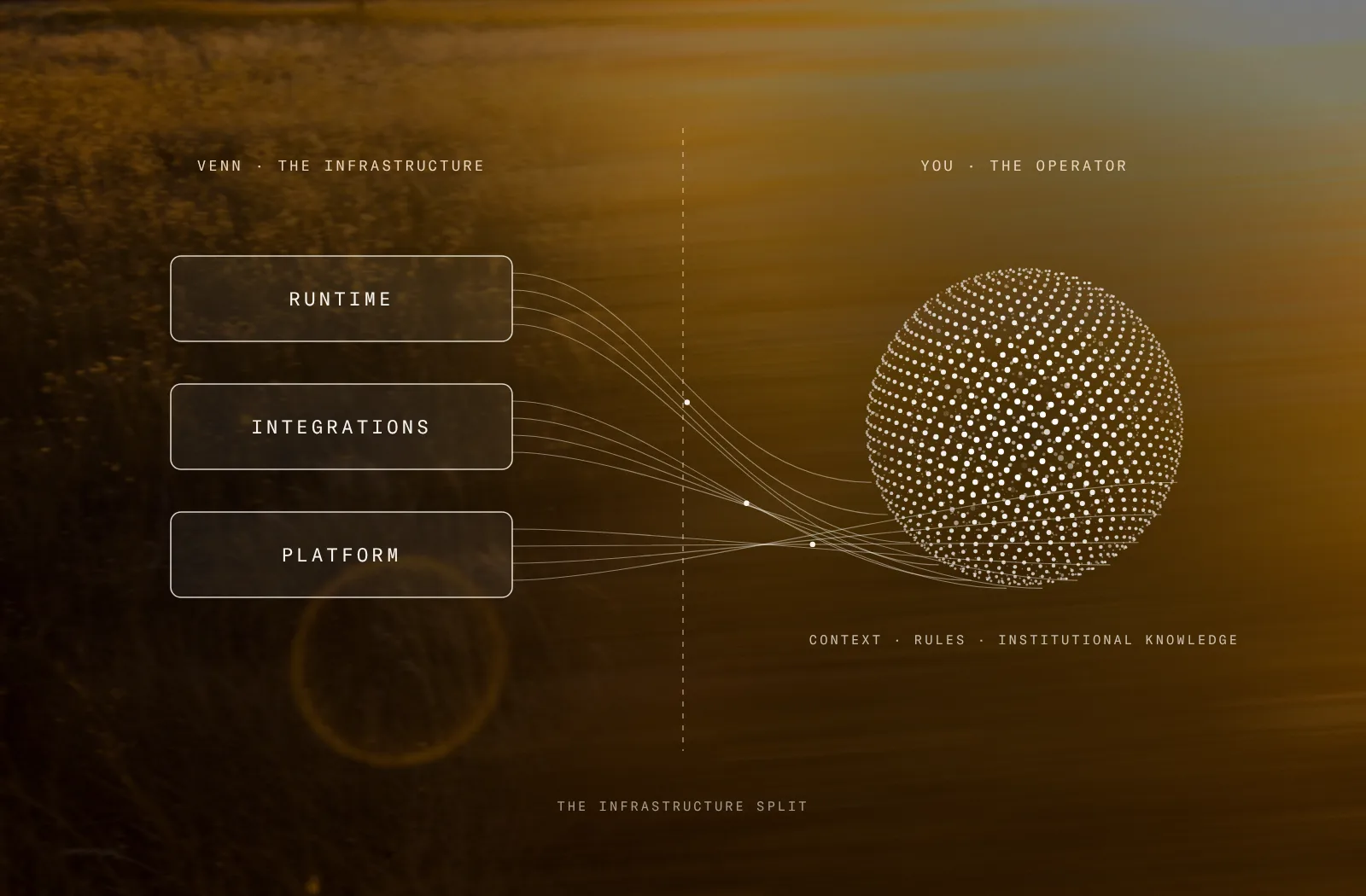
An application is a surface-level tool designed for a single task. An AI infrastructure, on the other hand, is a foundational ecosystem where all data flows freely into a data lake for AI agents to do real work. Upgrading your real estate tech stack means moving from a tangled web of software subscriptions to a centralized AI operating system.
The 3 Core Pillars of a Future-Proof Tech Infrastructure
To stay competitive, property management software must be built on three integrated pillars:
1. The Operational Core (Your Single Source of Truth)
Your infrastructure must start with a rock-solid foundation for property teams, centralized personnel, accounting, ownership, all wrapped in secure PII data storage. In an infrastructure model, open APIs are non-negotiable. Your operational and financial core must communicate flawlessly with every other touchpoint in your portfolio.
2. The Experience Layer (Your Resident & Neighborhood Connection)
A basic tenant portal is no longer enough; you need a comprehensive resident experience platform. Infrastructure allows you to seamlessly blend onboarding, local neighborhood perks, and unified communication into a single pane of glass for the resident. Think, one resident login with access to every amenity, maintenance support, monthly rent dues, and community updates, all in one intuitive platform.
3. The Automation & AI Engine (Your Execution Layer)
When your data is centralized, multifamily technology can shift from reactive to proactive and predictive. Unified sovereign AI infrastructure seamlessly powers AI Leasing agents for instant, 24/7 prospect follow-ups. Even better, it manages the entire AI Resident Lifecycle, from triaging predictive maintenance requests to automating targeted renewal negotiations, without the need to bolt on separate AI point solutions for each phase.
Centralization: Powering Local Neighborhoods with Global Real Estate Infrastructure
Your communities are hyper-local, but your software shouldn't be. True infrastructure allows for "centralization."
Standardization at Corporate, Localization at the Community
Owning your real estate infrastructure means a corporate team in Chicago can manage portfolios in Miami, Austin, and Brooklyn using the exact same backend, while delivering a completely hyper-localized frontend experience to the residents in those specific cities, based on your organization’s operating knowledge.
Navigating Local Compliance and Operations
Instead of patching together regional software workarounds for different markets, a unified system automatically adapts to varying city regulations (like New York rent laws versus Texas property codes) at the infrastructure level.
Building "Neighborhood" in Any Zip Code
At Venn, we believe technology should connect residents. Centralized infrastructure makes rolling out these localized neighborhood experiences highly scalable. By streamlining everyday interactions and centralizing essential services, you create a more connected, convenient, and personalized resident journey that drives engagement, strengthens retention, and builds a stronger sense of community.
Stop Renting Your Resident Data: The ROI of Infrastructure
Renting vs owning your Context
In property management, "context" is the complete, holistic picture of your properties and residents. It is the interconnected web of a resident's maintenance history, amenity usage, neighborhood interactions, communication preferences, and lease renewals.
When you rely on disjointed point-solution apps, you are effectively renting your context. Each third-party vendor holds a fragmented piece of your data hostage in a silo. If you drop the app, you lose that piece of the resident's story. Owning your context means utilizing an infrastructure where all data flows freely into a centralized ecosystem that you fully control.
Breaking Down the Financial Impact
The ROI of moving from apps to infrastructure is immediate. By consolidating redundant SaaS subscriptions, you drastically reduce operating costs. Furthermore, unified data provides clear visibility into tenant behaviors, allowing operators to boost Net Operating Income (NOI) through higher retention rates.
Security and Compliance
Fewer apps mean fewer security vulnerabilities. Centralizing your data makes it vastly easier to comply with increasingly strict data privacy laws and protects your residents' information.
How Venn is Building the Property Management Infrastructure for 2027
Venn isn't just another resident app to add to the pile. We provide the foundational agentic infrastructure layer that integrates your operations, the resident experience, and neighborhood engagement into one unified ecosystem, with AI Agents doing work based on your operating rules.
By taking an API-first approach, Venn allows operators to stop fighting with clunky integrations and start delivering a seamless, neighborhood-driven experience that drives retention and NOI.
Time to Audit Your Property Management Tech Stack
The future of multifamily real estate belongs to operators who own their data and control their technology. It is time to stop buying disposable apps and start building a foundation that will scale with your multifamily portfolio.
Ready to stop the app fatigue?
Request a demo to see how Venn can consolidate your fragmented software into a powerful, neighborhood-driven infrastructure.
Frequently Asked Questions
A property management tech stack is the combination of software, tools, and digital platforms an operator uses to run their portfolio. While historically this meant buying dozens of separate apps for different tasks, the 2027 tech stack is shifting toward a single, unified proptech infrastructure.
An app is a point-solution designed to solve one specific problem (like package delivery or rent collection), which often leads to fragmented data. Proptech infrastructure is an API-first foundational ecosystem where all operational and resident data flows freely, allowing you to run your entire portfolio from a single source of truth.
In a centralized infrastructure, AI can be applied holistically rather than in silos. This enables seamless AI Leasing for instant 24/7 prospect follow-ups, and powers the entire AI Resident Lifecycle, predicting maintenance needs and automating renewal negotiations, without needing separate AI subscriptions for each phase.
Your "context" is the complete, holistic picture of a resident's history, preferences, and behaviors. Owning your context means keeping all of this data in a centralized, secure ecosystem that you control, rather than "renting" fragmented pieces of data stored across dozens of disconnected third-party apps.
enn replaces the fragmented "Franken-stack" with a foundational infrastructure. By bringing operations, the resident experience, and local neighborhood engagement into one unified platform, Venn eliminates the need for residents and property managers to juggle multiple logins and disconnected apps.


